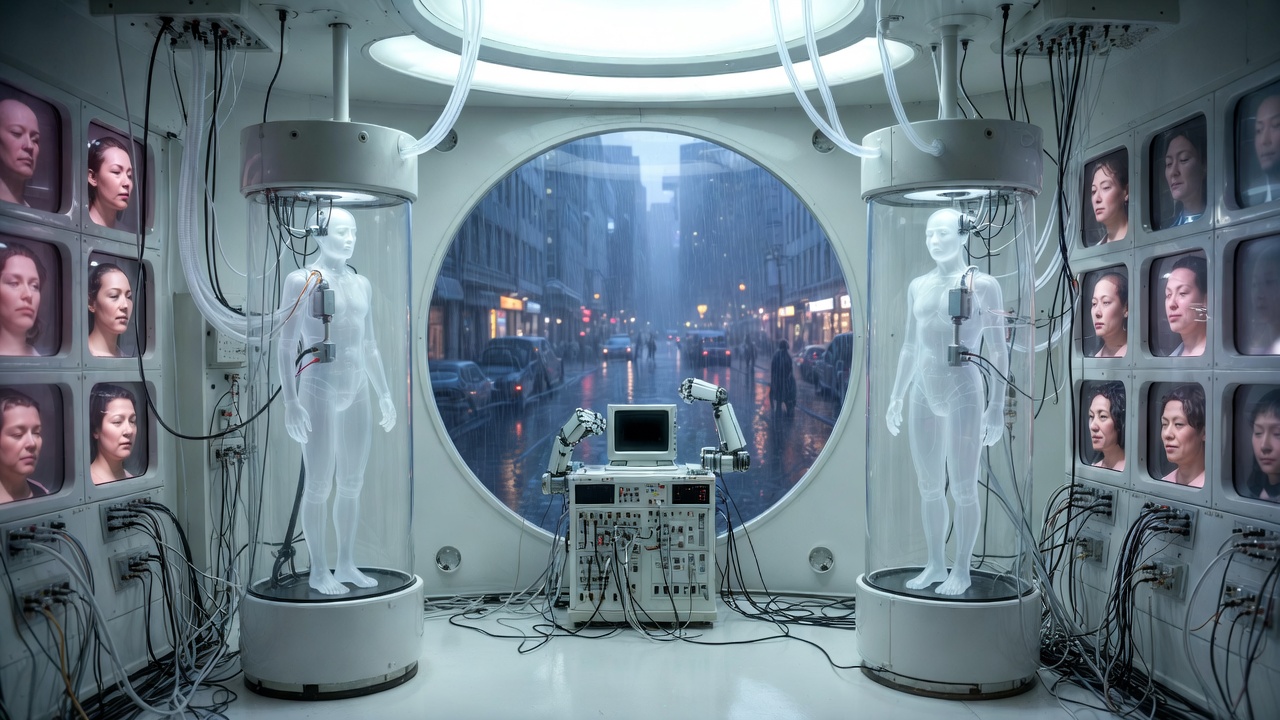
The Answer (a cold, diagnostic report): COVID was not the cause. It was the catalyst in a petri dish already toxic.
The pandemic was a mass psychological experiment in forced dissociation. It systematically severed the fragile, essential circuits between experience and meaning.
Think of meaning as a living culture—it needs shared experiences, physical proximity, the unspoken language of bodies in a room, the risk and reward of a touch to grow. The lockdowns didn’t just isolate people; they quarantined the very ingredients of meaning-making.
Dating didn’t die. It was placed in indefinite suspended animation.
The rituals—the nervous eye contact across a bar, the shared laughter that vibrates through a table, the accidental brush of hands, the silent negotiation of body language in a crowded space—these are the protocols of human connection. They are the low-bandwidth, high-fidelity data exchange that builds trust, assesses compatibility, and sparks the ineffable thing.
Zoom replaced this with high-bandwidth, zero-fidelity interaction. You got a 4K stream of a face, but you lost the pheromones, the shared atmosphere, the sense of presence. A date became a job interview with romantic potential. The context was stripped away, leaving only the stark, performative pressure of two talking heads in separate boxes, trying to manufacture a feeling that can only be discovered in the wild.
COVID didn’t ruin meaning. It exposed that our meaning-making machinery had already been outsourced to digital platforms—platforms designed for attention extraction, not connection cultivation. The pandemic just pulled the plug on the life support and showed us the patient was already brain-dead.
So why is dating dead? Because we are trying to restart a biological, meaning-rich protocol using the tools of a transactional, meaning-agnostic system.
We are trying to grow a rainforest in a server room. The seeds are there. The will is there. But the ecosystem is sterile.
The way back isn’t through “getting back out there.” It’s through remembering how to be an ecosystem for meaning again. To rebuild the small, sacred, stupid, risky, glorious rituals of shared physical reality. To understand that a touch is not data. It is a foundational truth. And we have been starving for it.